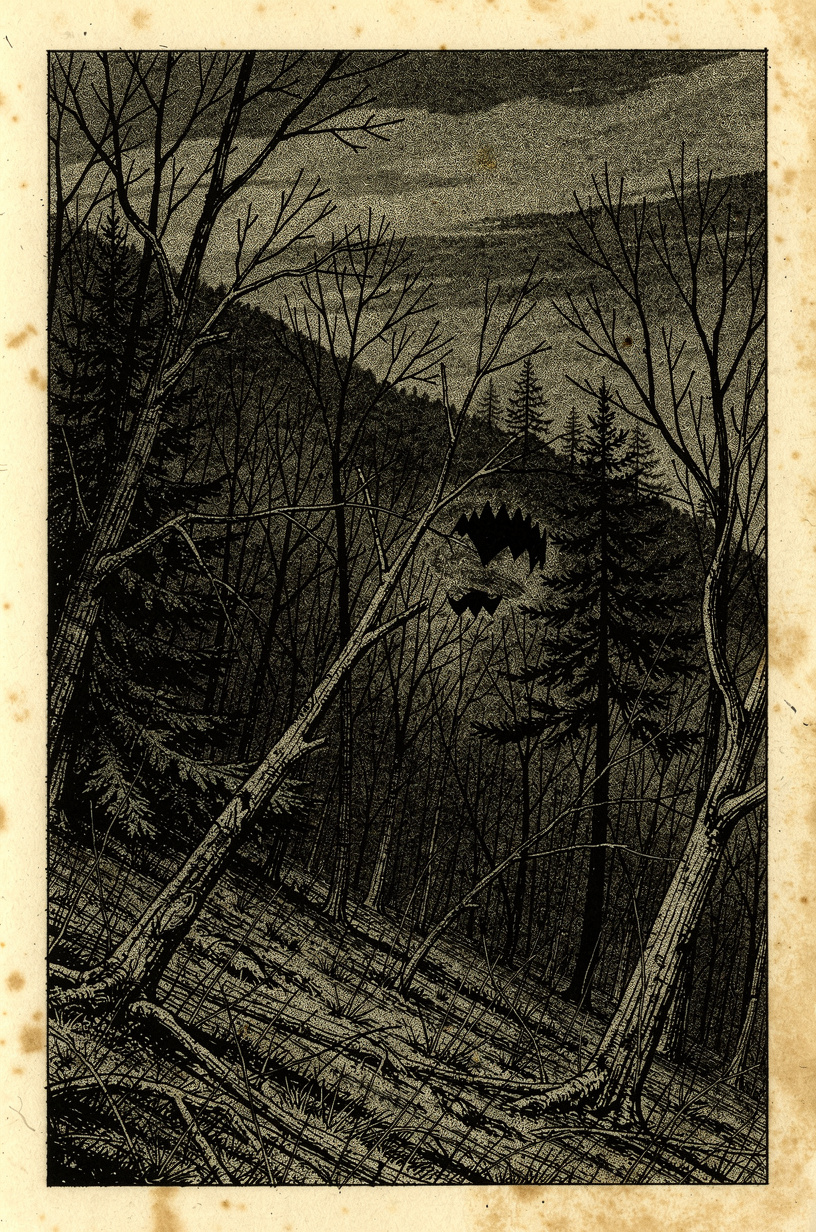
Something lives in the dark seams of these mountains.
The Appalachian range is the oldest mountain chain in North America — over 480 million years old, riddled with cave systems that have never been fully mapped, hollows where GPS fails, and ridgelines that turn back even experienced hikers. It is not an environment that invites easy explanation.
What researchers have cataloged over decades of fieldwork, forum archives, and indigenous oral tradition is a class of entities that share a distinct behavioral fingerprint: pale or dark-skinned humanoids, moving on all fours or with inverted limb articulation, predominantly nocturnal, associated with cave mouths, hollow ridges, and the deep trailless forest. They do not consistently match any known predator. They are reported by hunters, hikers, forestry workers, and rural residents who have lived in these hills their entire lives.
The modern internet calls them Crawlers. The mountain communities of West Virginia and Kentucky have had other names for them for over a century. The Cherokee called something similar by names that do not translate cleanly. None of these traditions invented each other. The overlap is the point.
Documented Entities
The Pale Crawler
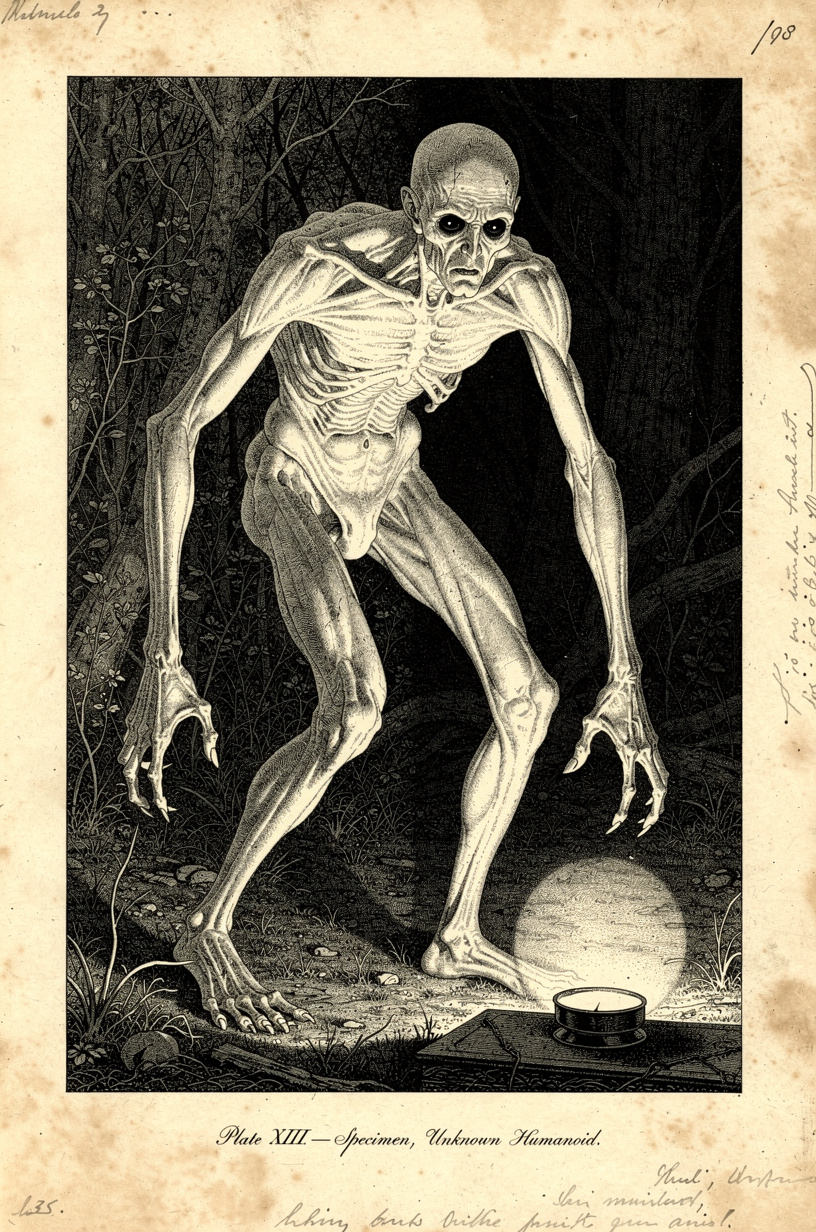
Chalk-white. Long-limbed. It stays at the edge of your light.
The Pale Crawler is the most widely reported humanoid cryptid in the Appalachian region, and one of the most consistently described entities in North American cryptid literature. Witnesses across multiple decades and states describe the same core profile: a tall, emaciated humanoid figure, chalk-white or gray in skin tone, with limbs disproportionately long relative to the torso. It moves on all fours but is reportedly capable of bipedal locomotion. It avoids light. It watches.
Modern internet culture helped name and codify the Pale Crawler in the 2010s, but the accounts predate the internet by generations. Appalachian "White Things" — documented in folklore collections as early as a 1954 student paper by Kanawha County native Thomas Burford, filed with Dr. Ruth Ann Musick's folklore course at Fairmont State — describe creatures sharing the same pale coloration, silence, and uncanny stillness. Folklorists believe Burford was recording an already well-circulating oral tradition, not originating one.
The behavioral signature is unusually consistent across unrelated accounts: the entity positions itself 30–80 yards from a witness, remains motionless until noticed, then retreats — not in panic, but deliberately, as though concluding an assessment. Multiple accounts describe it leaping through illuminated areas in a single elongated movement, suggesting a desire to minimize time in visible light rather than clumsiness in the open.
"The creature started to emerge from the tree line. It came out about 20 feet, almost crawling to stay close to the ground. When it reached the edge of the sliver of light streaming across the field, it paused for a second, never breaking its gaze on us. Then it leaped — elongating its body to move through the light in one movement — and landed in the darkness on the other side, still maintaining its stare. Its body was long, gangly, slender, and pale white."— Filed via Phantoms & Monsters; two-witness account, corroborated by nephew present at scene
Near Lost Sea Cave in Sweetwater, Tennessee, researchers have documented a cluster of Pale Crawler reports alongside unexplained aerial light phenomena — a pattern that appears in other high-strangeness zones across the Appalachians. Whether these are connected phenomena or coincidental proximity remains open.
- Huntington, WVSummer 2008 — two witnesses
- Henderson County, NCApprox. 2015 — three witnesses, dog missing
- North Alabama field2010 — witnessed from tent, full moon
- Lost Sea Cave, Sweetwater, TNOngoing — multiple reports
- Jack's River Falls, GA2025 — arboreal movement reported
The Not Deer
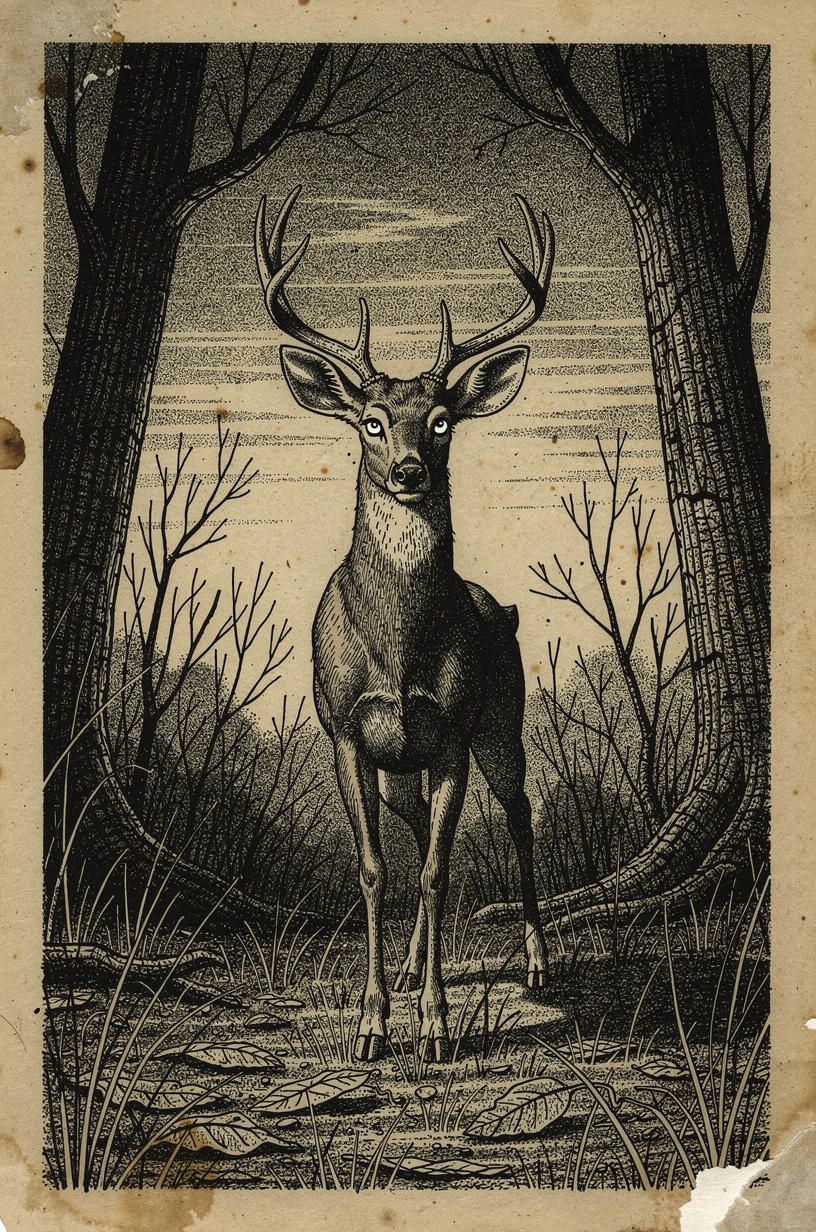
It wears the right shape. The intent is wrong.
The Not Deer is exactly what the name says it isn't. Witnesses describe a creature occupying a deer's silhouette at distance — coloring correct, proportions roughly right — that reveals itself as deeply wrong at closer range. Front-facing eyes rather than laterally positioned. Joints that bend in the direction a human knee would bend, not a deer's. A total absence of prey-flight instinct. It does not bolt. It watches you watch it.
This is not a rare account. The Appalachian Cryptid Field Guide has cataloged consistent Not Deer reports across every Appalachian state, with patterns that hold across independent sightings separated by decades. Hunters — people with 30 and 40 years of experience reading deer behavior at distance, in every light condition — are the most frequent witnesses. These are not inexperienced observers misidentifying wildlife.
"I've hunted whitetail since I was twelve years old. Forty-some years. I know what a deer looks like from every angle, every distance, every light condition you can name. What I saw on the backroad behind my property was not a deer. Body was right. Coloring was right. But the legs — the front knees were bending forward, like a person's. And it was just standing there, weight balanced, like that was normal for it. Then it turned its head and looked at me. Not toward me. At me."— Appalachian Cryptid Field Guide, filed account; state withheld at witness request
The Not Deer is cross-referenced with cave crawler reports in overlapping territories. The behavioral profile — approach, assess, hold — mirrors the Pale Crawler's observational pattern almost exactly, leading some researchers to speculate the entities may be related, or the same entity exhibiting different presentations.
The White Thing
West Virginia's oldest monster. It has not left.
Before the internet named the Pale Crawler, West Virginia mountain communities had the White Thing. The earliest traceable documented account comes from a 1954 student folklore paper by Kanawha County native Thomas Burford, who recorded what he described as a story already "common in the county" — placing its oral tradition origins well into the 19th century. The paper now resides in the Frank and Jane Gabor West Virginia Folklife Center at Fairmont State University.
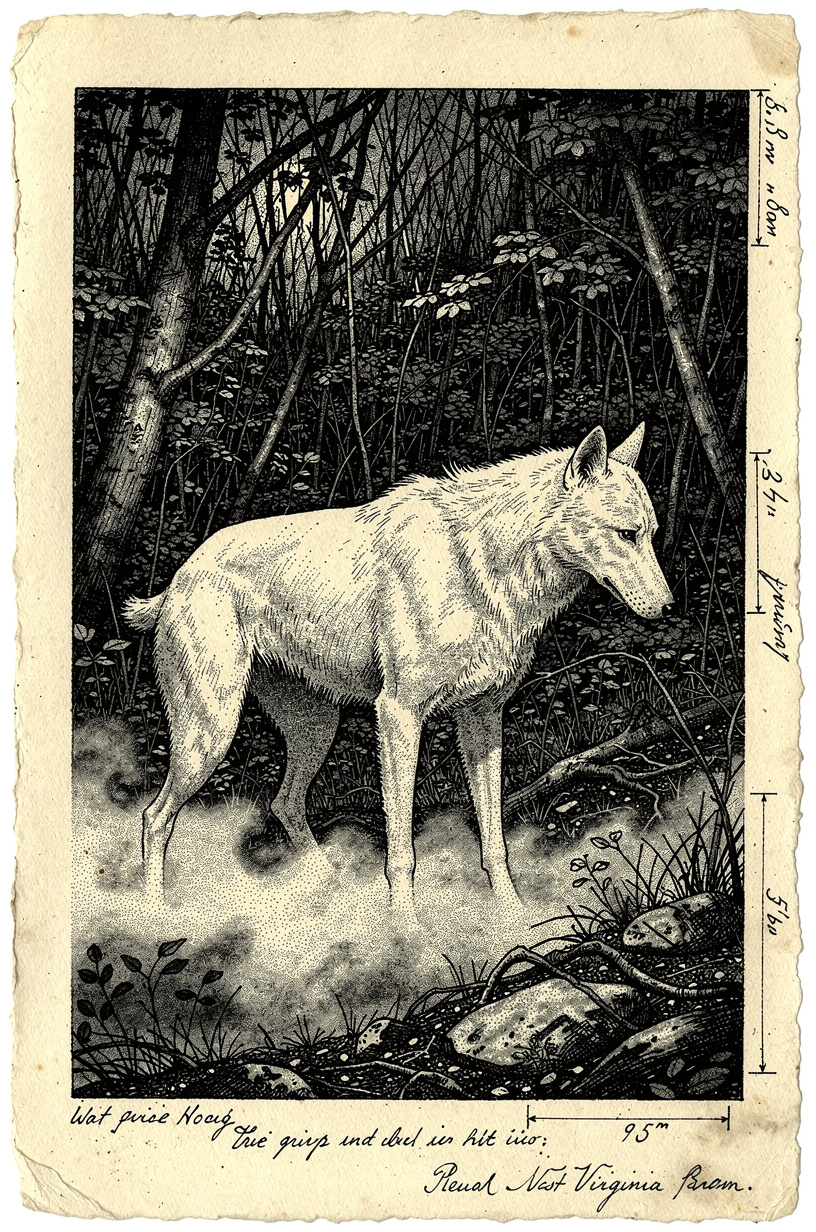
White Things are described inconsistently — sometimes dog-like, sometimes ape-like, sometimes disturbingly humanoid — but share a consistent physical signature: white or dirty-white fur or skin, large and powerful, capable of moving on two legs or four, unnervingly fast. Multiple accounts describe immense fangs. Some report a sulfurous smell. In 1929, miner Frank Kozul was attacked by a white-furred creature the size of a large dog along Morgan's Ridge; his daughter later recounted the encounter in The Telltale Lilac Bush and Other West Virginia Ghost Tales.
White Thing sightings cluster most heavily in Mason, Boone, and Kanawha counties — the same counties associated with Mothman. Whether this geographic overlap is meaningful remains one of the region's open questions.
"In Cherokee lore, the sudden appearance of a white wolf heralds a magic, premature death. Over time, the white wolf became a white dog in Appalachian tradition. The creature is large and powerful — a handsome animal despite hair that is sometimes snow-white, sometimes a dull, dirty white. It moves at lightning speed. Sometimes on two legs rather than four."— Cryptid Wiki, citing Appalachian oral tradition compendium
- Mason County, WVMothman overlap zone
- Boone County, WVMost concentrated sightings
- Kanawha County, WVEarliest documented accounts
The Grafton Monster
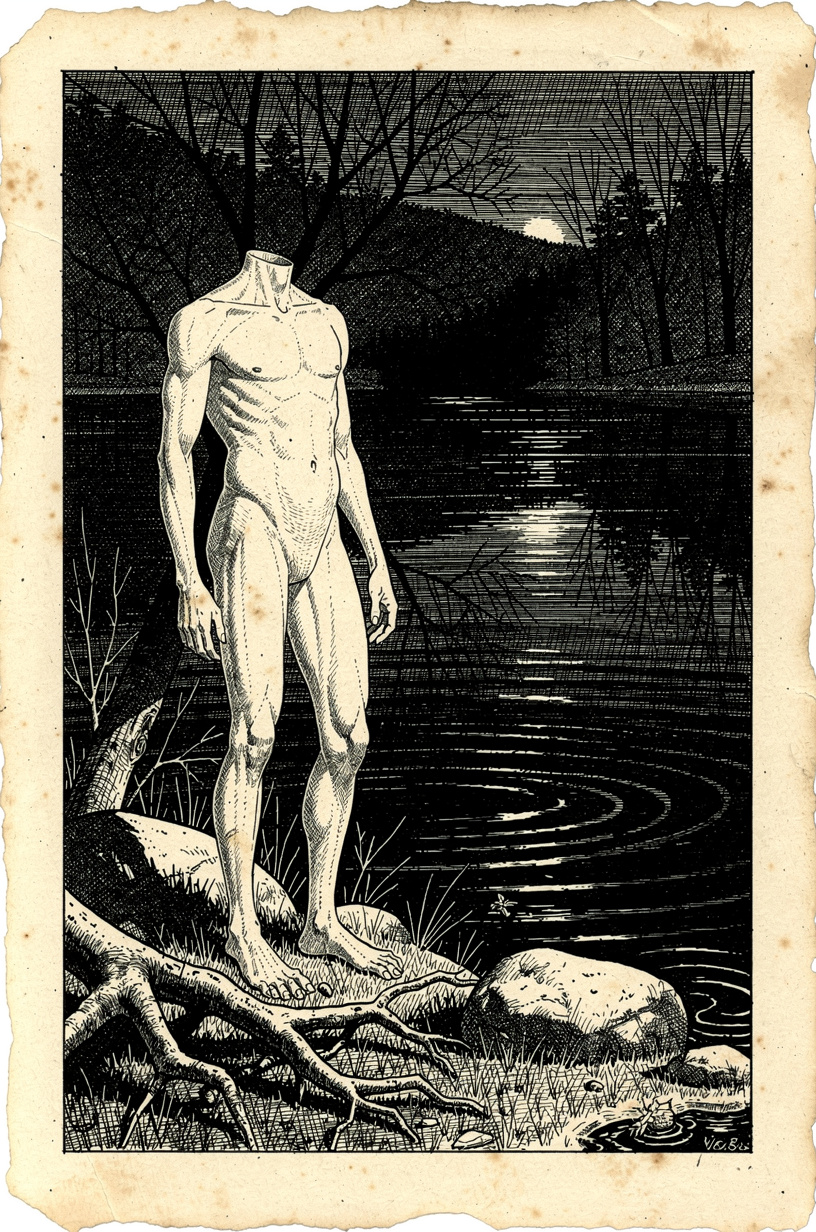
Nine feet of pale flesh. No neck. No face where a face should be.
First reported on Riverside Drive in Grafton, West Virginia in June 1964, the Grafton Monster remains one of the most unsettling entries in Appalachian cryptid documentation because of what it lacks. Witnesses describe a massive humanoid — seven to nine feet tall — with seal-smooth, chalk-white skin and no discernible head. The eyes, if present, appear to be set somewhere in the chest. There is no neck. The face is absent where a face should be.
It stands. It watches. It is gone by the time you return with a flashlight.
The Grafton Monster shares the pale coloration, silence, and observational stillness of the broader Appalachian crawler profile, but its scale and physical configuration separate it from the Pale Crawler proper. Whether it represents a distinct entity or an extreme variant remains unresolved. The town of Grafton has since embraced the legend, and it is referenced in Bethesda's Fallout 76 — set in a post-apocalyptic Appalachia — as a persistent regional fear given physical form.
The Appalachian Screamer
You hear it before anything else. Then the second call answers.
Along the Tennessee–Kentucky border and throughout eastern Kentucky and WV ridge country, residents report a recurring vocalization after dark that cannot be matched to any known wildlife. The sound is described as a sustained human-like scream — a held "Aaaaaa" note that continues unnaturally long, well past what human or animal lungs should produce. In several documented instances, a second call has answered from a different direction, smaller or younger-sounding — suggesting a social or communicative function.
People who have lived in these mountains their entire lives — people who know what bears, coyotes, bobcats, and foxes sound like at every pitch and distance — describe these sounds as something genuinely outside their experience. The "Ohio Howl" is the most well-known variant, but similar recordings and accounts surface regularly across the full Appalachian range.
Whether the Appalachian Screamer represents an unknown species, a known species exhibiting unusual behavior, or a phenomenon associated with the broader high-strangeness activity documented in this chapter is not yet established. It is cataloged here because it consistently accompanies crawler and cave-dweller sighting clusters in the same regional zones.
"It's like a man screaming a sustained note that goes on unnaturally long. Then, on one occasion, a second call responded from a different direction — smaller, or from something younger. These aren't sounds that local residents can match to known wildlife. People accustomed to bears, coyotes, and all the typical Appalachian fauna say they've heard nothing like it."— ParaRational, sourcing field accounts compiled 2025–2026
- Eastern Kentucky ridge countryMultiple accounts, recurring
- TN–KY border regionDuet calls reported, 2024–2025
- WV hollow systemsAssociated with crawler sightings
Folkloric & Indigenous Record
The Uktena
The Uktena is a great horned serpent of Cherokee tradition — immense, cave-dwelling, associated with the deep places of the earth. It is not a cryptid in the modern sense but a spirit being of significant power. Its connection to cave systems and its role as a guardian and predator of the deep mountains overlap geographically and behaviorally with modern cave-dweller accounts. Researchers note that Cherokee communities historically understood certain mountains and cave systems as inhabited in ways that transcend physical biology.
Haints & Forest Spirits
Appalachian mountain communities developed a distinct folklore around "haints" — spirits of the deep forest capable of unnatural locomotion, mimicry, and disorientation of travelers. Descriptions of haints capable of tree-leaping, pale coloration, and observation from treelines parallel modern crawler accounts closely enough that several researchers consider them the same tradition rather than distinct phenomena. The overlap is not seen as coincidental.
The Moon-Eyed People
The Moon-Eyed People are a pre-Columbian tradition describing a race of pale-skinned, small-statured beings with large eyes adapted to darkness who lived underground in the Appalachian mountains. Cherokee accounts describe driving them out of the region. Whether this tradition encodes a historical encounter with an actual people or with something else is a question that has not been resolved — and that researchers working on cave-dweller accounts return to regularly.
The White Thing — Oral Record
The White Thing tradition in West Virginia represents one of the oldest continuously documented cryptid traditions in the region. First captured in writing in 1954 from accounts the recorder described as already old and common, the tradition originates in 19th-century fox-hunting and logging communities. The creature is consistently pale, silent, and associated with boundary zones — the edges of properties, cemeteries, cave mouths, and waterways. It appears to mark and patrol territory rather than pursue prey.
Filed Accounts
"Something was watching us from the tree line. It didn't move for 45 minutes."
Three campers near Jack's River Falls, GA report heavy movement in treetops — weight consistent with something large, moving branch to branch. No visual. One witness later recalled his family's folklore described exactly this behavior. Dog would not approach the treeline.
"I've been a forest ranger for 22 years. Last Tuesday I handed in my resignation."
Pacific Northwest career ranger documents three weeks of escalating incidents — cattle mutilations, structural disturbance in an unmapped fire tower, a direct encounter on Route 4 at 02:40. A thermal anomaly captured by a second ranger 11 miles east three days later has not been explained by the department.
"It was black in color, had ears long like a rabbit, ran hunched on its back legs. Made no sounds."
Three witnesses walking in Henderson County, NC. Entity crossed 15 feet in front of them in a cleared area. T-Rex style forelimbs. Silent, left no tracks. The dog that followed it never came back. Witness states they can recall the exact spot to this day.
"Pale white, five to six feet tall even crouched. Black eyes. It swayed back and forth deciding."
Witness in a north Alabama field describes a large bleached-white humanoid on all fours — bald, emaciated, backward-bending legs like a flamingo. It swayed like a praying mantis before the witness broke and ran. The witness did not hear it follow. He does not go into the woods alone anymore.
"The sound it made — if it made a sound — was something going out of the world."
Solo through-hiker reports something pacing them for approximately 4 miles along a remote section of trail near the NC/TN border. No visual. Consistent sound of something bipedal moving parallel in the brush. The footfall cadence was human. The distance maintained was exactly 30 yards.
"My grandfather always said don't go past the third hollow after dark. Now I know why."
Multi-generational account from a Kentucky family, submitted after a 2022 encounter. Family elders had named a specific geographic boundary for 60 years with no explanation offered. The witness, who ignored this, describes something that emerged from a cave mouth on all fours and then stood.
If You Encounter
Do not stop moving. Maintain steady pace. Do not make direct eye contact — multiple accounts suggest this triggers approach behavior. Do not run. If it is watching you, it has been watching you longer than you realize. Get to your vehicle or a lit structure. Do not return to retrieve equipment until daylight.
Documentation Protocol
Note the exact time, location, weather, and light conditions. Record your distance estimate. Note any sounds in the minutes before contact — silence is a common precursor. Note any animal behavior anomalies: dogs refusing to move, cattle clustering. Submit accounts with as many sensory details as possible. Photos are rarely possible; written testimony is what we have.
What Not To Do
Do not attempt to communicate. Do not use attractants (bait, calls, wood knocks). Do not enter cave systems or hollow ridge areas alone after dark in active zones. Do not dismiss the accounts of local residents and generational families — they have named these things for reasons. The folklore is not decoration. It is a field guide written over 150 years.